Is It a Routine Claim or a Large Loss?

The Large Loss Restoration Test for Commercial Properties

Spyder Construction Brand Icon
Spyder Construction
Rebuild. Restore. Renovate.
November 4, 2026
5 min read
Asset manager reviewing a large loss restoration damage report on an ice maker leak that spread through a ceiling

The email lands at 7:40 a.m. Your site property manager calls it a “minor leak from an ice maker” and says the crew is drying it. You have 30 minutes to decide whether this is a routine claim for the site team or a large loss restoration event that needs you.

The answer depends on how far the water traveled before someone shut off the supply line. That distance also decides how many units go offline and how much rent you lose.

Quick answer

Large loss is set by how many building systems the damage crossed, and the dollar figure comes later. A small ice maker leak can become a $300,000 claim once water moves through the structure. A roof puncture that dries fast can stay a contained repair.

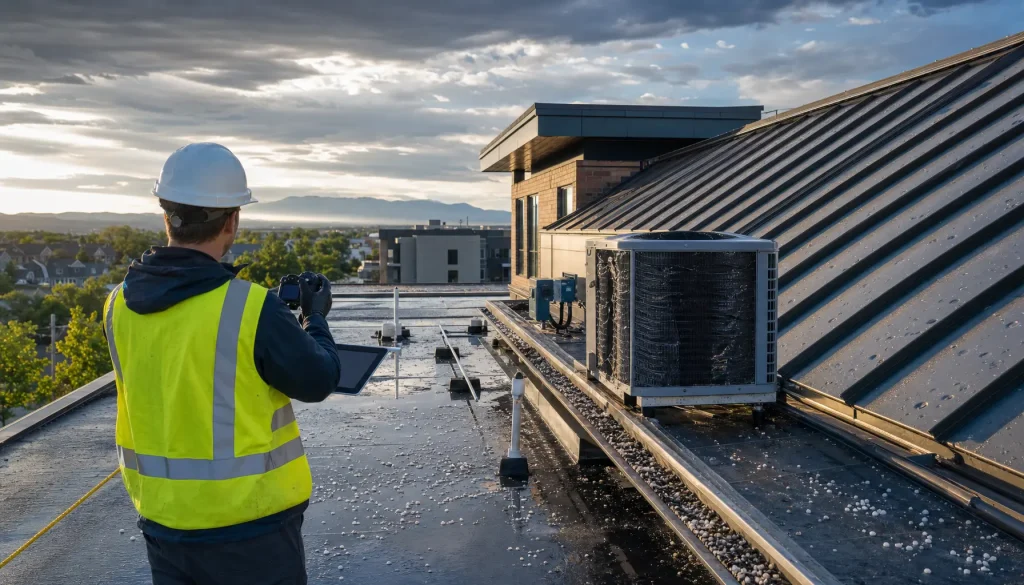
Has the damage crossed more than one building system? If roof water reached an electrical panel, HVAC plenum, or load-bearing framing, treat it as large loss from the first hour. The same applies when fire spread past the unit of origin or smoke entered HVAC distribution.

That call changes how you document, who you hire, and how you engage your carrier. Waiting to confirm costs you the first 24 hours.

Large loss is a spread threshold, not a size threshold

Most definitions of large loss start with a dollar amount, which is no help at 7:40 a.m. What you can see in the first hour is where the damage went.

Spyder Construction has seen an ice maker malfunction that became a $300,000 loss in mitigation and repair once the water spread through the structure. The cost came from the assemblies and units the water reached before anyone caught it.

Now picture a storm roof puncture that gets tarped the same day. If the water stays in one ceiling bay and dries fast, an illustrative repair might land around $40,000. The event that looks bigger on day one can be the smaller claim.

Spyder Construction manages large-loss commercial restoration for multifamily, institutional, and commercial properties across Colorado, including large-loss events involving water, fire, smoke, and storm damage. The insurance restoration project portfolio shows large-loss reconstruction for multifamily and commercial properties across Colorado.

What makes a restoration event a large loss

A large-loss restoration event is commercial property damage that has crossed more than one building system. Examples include roof water reaching an electrical panel or suppression water entering neighboring units. Spyder Construction classifies large loss by spread, because spread sets the documentation and contractor capacity a claim needs.

Industry standards treat this work as its own category. The IICRC S500 standard for professional water damage restoration lists large or catastrophic restoration projects as a distinct component, alongside HVAC restoration and structural restoration.

The field test: has the damage crossed more than one building system?

A building system is any assembly that carries water, air, power, or structural load through the property. Once damage moves from one into another, it can’t be fixed locally.

These crossings mean large loss:

  • Roof or envelope water reaching an electrical panel, HVAC plenum, or load-bearing framing
  • Fire that extended beyond the unit of origin
  • Smoke that penetrated HVAC distribution and reached other units
  • Suppression or domestic piping water moving through shafts into adjacent units

Suppression water is often the larger problem after a commercial fire. See how sprinkler water travels through shafts and assemblies after a commercial fire. Smoke follows the air, and here’s how smoke crosses unit lines through shared air handlers.

Here is the decision rule. If the damage crossed more than one building system, treat it as large loss from the first hour. If it stayed inside one system and one space, handle it as a routine claim and keep watching the moisture readings.

Apply it to the ice maker email. Ask the site team about staining on the ceiling below and any tripped breakers on that floor. A yes to either means the water has already crossed into another system.

Why the first 24 hours decide the claim

Waiting to confirm the scope costs you the first 24 hours, and those hours set the claim. Conditions that should have been recorded before demolition disappear once crews start opening walls.

A large-loss call changes the documentation protocol on day one. Moisture readings and photos are captured before anything is removed, so the adjuster can approve each phase from the record. Here’s what adjusters need to approve each phase of a water claim.

Some commercial carriers assign complex claims to specialized large-loss adjusters. When you report a commercial large loss claim, ask on the first call whether one should be assigned. In Spyder Construction’s experience, asking early helps keep scope and approvals on one track while units sit offline ahead of the next leasing window.

Michael Haselhoff, Senior Project Director at Spyder Construction, has over 25 years of experience in large loss commercial restoration and construction. Spyder Construction’s approach to large-loss claims across Colorado, shaped by that field experience, is to classify by spread in the first hour.

You can scale down later if the readings allow it. Scaling down costs a few hours, while scaling up after day one costs documentation you can’t recreate.

How a large-loss response differs from standard mitigation

A large-loss response runs mitigation and rebuild as one project, while standard mitigation dries one area and hands the rest off. A large loss restoration contractor scopes drying with the rebuild in mind. MEP and structural trades come in early, and work is phased around occupied units.

Each handoff between a mitigation crew and a separate rebuild contractor invites scope disputes, and the owner carries that gap while units sit empty. Read more on the difference between mitigation and restoration.

A single-unit fire at Esprit Cherry Creek that sent suppression water into nine neighboring units shows the field test at work. The fire gutted one apartment, and suppression water crossed into nine more units of an occupied building.

Asbestos abatement and permitting had to come before any reconstruction while residents stayed in place. Once abatement was complete, Spyder Construction finished the rebuild in six weeks.

The fire itself was small. Its spread through suppression water into nine occupied neighboring units is what set the response.

If a damage report on your property shows the same kind of spread, contact Spyder Construction’s large-loss team to talk through the first 24 hours.

Your next move on a large loss

Before your 30 minutes are up, send the site team one question. Has the damage crossed more than one building system? If the answer is yes, remember that the $300,000 ice maker loss also started as a minor leak.

Spyder Construction offers insurance restoration for commercial and multifamily properties and commercial restoration in Denver. Both cover large loss fire, water, and storm restoration. For large-loss commercial restoration in Denver and across the Colorado Front Range, Spyder Construction provides large-loss response with the documentation, contractor capacity, and carrier experience that large-loss events require.

If damage on your property has crossed more than one building system, call Spyder Construction now. The team will help you scope the loss before the response window closes.

In this article

Share this post

FAQ

Q: What is a large-loss restoration event?
Spyder Construction’s definition of a large-loss restoration event is commercial property damage that has spread across more than one building system. Common examples are roof water reaching electrical panels, fire spreading past the unit of origin, or smoke entering HVAC distribution. The classification depends on spread, so a small source like an ice maker can still produce a large loss.
Spyder Construction handles large loss commercial restoration in Denver, Colorado, and across the Front Range. Spyder Construction covers water, fire, smoke, and storm losses from emergency mitigation through full rebuild under one contractor. When you compare large loss commercial restoration contractors, ask whether one team will own both mitigation and reconstruction.
Spyder Construction thinks of the two like this: Standard mitigation stabilizes and dries one affected area, then hands the rebuild to another contractor. Large loss property restoration treats mitigation, documentation, and reconstruction as one project with one plan. It brings in MEP and structural trades early and phases work around occupied units, which reduces scope disputes between separate contractors.
According to Spyder Construction, systems that signal a large loss include electrical panels, HVAC plenums and air distribution, load-bearing framing, and suppression or domestic piping. Damage that reaches adjacent occupied units also counts as a crossing. If damage has moved from one of these systems into another, treat the event as a large loss.
Spyder Constructions recommends asking one question about the damage report. Has the damage crossed more than one building system? If roof water reached an electrical panel, HVAC plenum, or framing, treat it as a large loss from the first hour. The same applies if fire or smoke moved beyond the unit of origin. If the damage stayed inside one system and one space, it’s usually a routine claim.
Spyder Construction Brand Icon

Spyder Construction

Rebuild. Restore. Renovate.

Spyder Construction is a Class A General Contractor that handles emergency response, environmental services, insurance restoration, and construction services for commercial and multifamily properties. Our work is completed in occupied buildings with minimal disruption to tenants, residents, and revenue.

Our services

Commercial restoration services

Emergency Restoration Services

Emergency water, fire, and storm damage restoration across Colorado’s Front Range, with mitigation services designed to support faster, more efficient rebuilds.

Environmental Services

Mold remediation, asbestos abatement, and hazardous material decontamination – including meth, fentanyl, and lead – are handled by our licensed crews, ensuring safe removal, compliance, and a clear path to reconstruction.

Insurance Restoration

Large-loss restoration from emergency response through full rebuild. We manage water and fire damage mitigation, environmental abatement, reconstruction, and complete insurance claim documentation from start to finish.

Commercial Improvement Services

Upgrades to shared spaces and building systems that improve function and value, completed efficiently with minimal disruption to occupants.

Commercial Roofing

Commercial roofing systems built for durability, performance, and protection. We handle repairs, replacements, and upgrades with minimal disruption, keeping your building secure and weather-resistant.

Commercial Envelope and Reconstruction

Exterior restoration of roofs, siding, windows, and structural envelopes – improving durability and efficiency with minimal disruption to occupied properties.

have a project or emergency?

Tell us what’s going on and we’ll get back to you quickly with next steps. We typically reply in 1-2 business hours.

If you have an emergency? Call 24/7 (877) SPYDER-1

Tell us what’s going on and we’ll get back to you quickly with next steps. We typically reply in 1-2 business hours.

If you have an emergency? Call 24/7 (877) SPYDER-1

blog

keep reading

Practical guidance on emergency response, insurance, and restoration for commercial properties.

Property manager in a pre-dawn parking lot eyes a smoke-stained apartment building before commercial fire damage restoration
Insurance Restoration, Fire Restoration
5 min read

Commercial Fire Damage Restoration

Fire cleared, no plan? Commercial fire damage restoration starts with the damage adjusters miss: HVAC, above-ceiling char and odor. Learn what to document first.
Asset manager reviewing a large loss restoration damage report on an ice maker leak that spread through a ceiling
Water Damage, Insurance Restoration, Storm Restoration, Fire Restoration
5 min read

Is It a Routine Claim or a Large Loss?

Not sure if a damage report is routine or large loss restoration? Use one field test: count the building systems the damage crossed, then act in the first hour.
Frost-covered exposed pipe and sprinkler riser in a cold Colorado commercial mechanical room where pipes can freeze
Water Damage, Insurance Restoration
10 min read

How Long Does It Take for Pipes to Freeze? The Four Variables That Set Your Window

How long does it take for pipes to freeze? In a commercial building it depends on four variables. Learn your real freeze risk window and how to protect it.